
Hey everyone! Ever wonder how locomotives haul ten thousand tons loads and still run smoothly around curves, even in rain, snow, and frost?
The secret lies right here in this adhesion test!
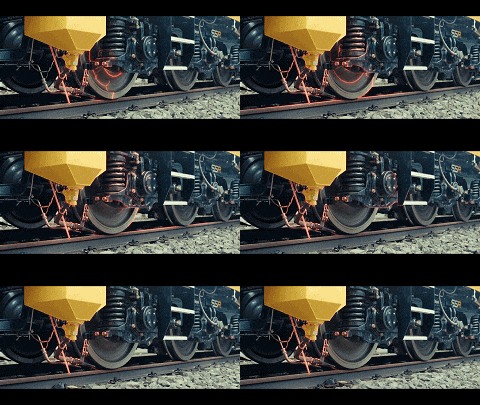
PART 1 | What is "Adhesion" ?
"Adhesion" denotes the tractive friction between the wheel and the rail.
A mismatch between available adhesion and actual track conditions results in wheel slip, potentially causing severe damage to both the wheel tread and the rail surface.
That’s why the adhesion test is a must before any locomotive leaves the factory!
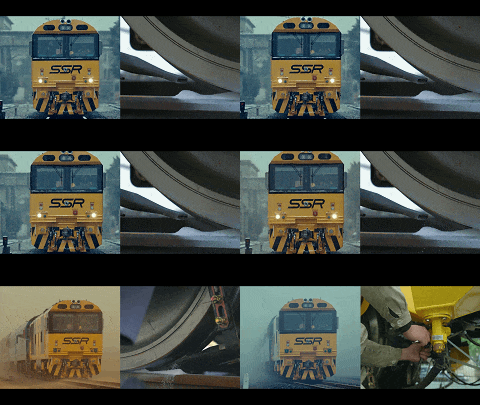
PART 2 | How is the test conducted ?
How is the adhesion test conducted? It comes down to three steps.
Step one, simulate real-world harsh conditions like rain, snow, sand application, and frost.
Step two, run repeated tests on grades and curves at various speeds to see when slipping occurs.
Step three, gradually increase the tractive effort to find the critical point just before the wheels slip.
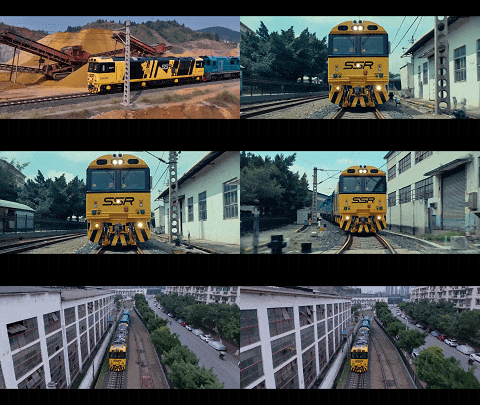
The goal of these three steps is singular.
Finding the maximum adhesion. This prevents wheel spin and rail grinding.
Ensuring the locomotive can haul heavy loads and run smoothly.
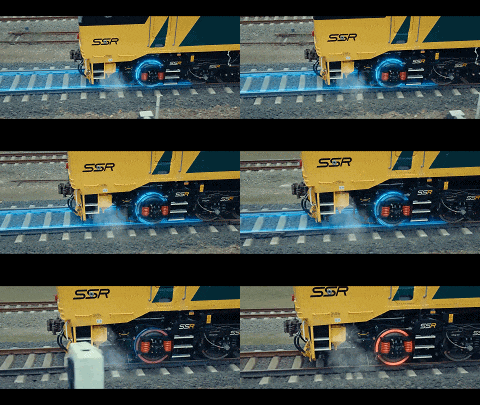
So the adhesion test is to put the locomotive through trials on ramps in rain and snow conditions before it leaves the factory, to assess its actual grip performance.
Only when it meets the required standards can it be put into operation for heavy haul traction.
Next time you see a locomotive running steadily through curves, you’ll know that is no coincidence. It is the result of rigorous prior validation.


