


On January 8, the China Railway Society announced the winners of its 2025 Science and Technology Awards. The project “4,400-Horsepower AC Transmission Freight Diesel Locomotive”, submitted by CRRC Qishuyan Co., Ltd., received the First Prize of the 2025 China Railway Society Science and Technology Award.
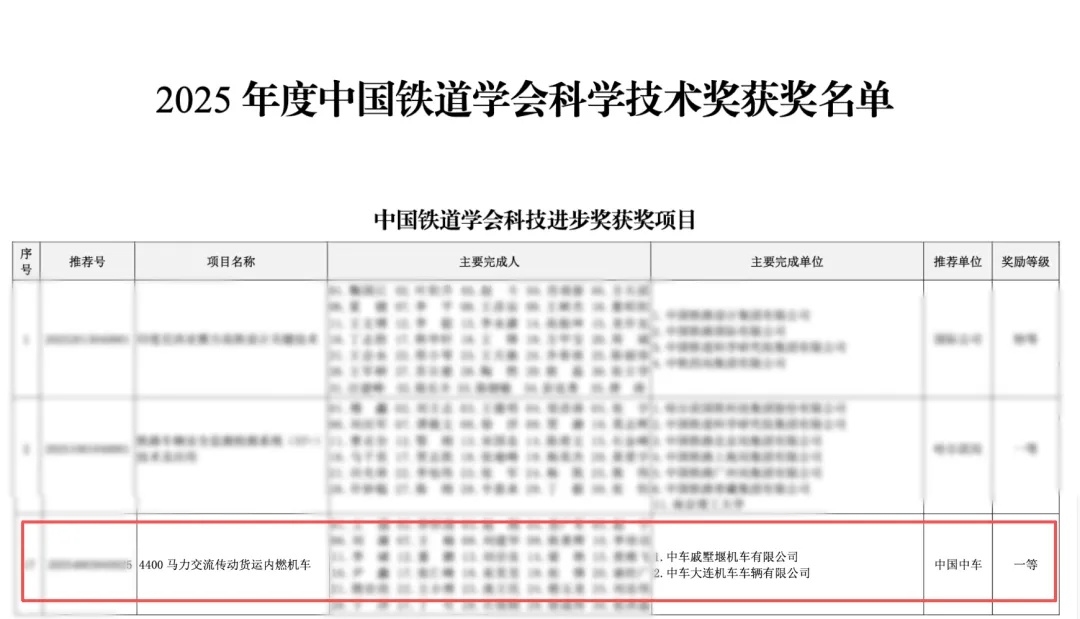
This marks the company’s second time receiving the railway industry’s most authoritative science and technology award, following its earlier win for the HXN5B AC transmission shunting diesel locomotive project.
Presented annually, the China Railway Society Science and Technology Award is one of the most influential honors in China’s railway sector. Candidate projects undergo a rigorous process including online review, preliminary evaluation by expert panels, final review by the awards committee, and public disclosure.
Project Overview
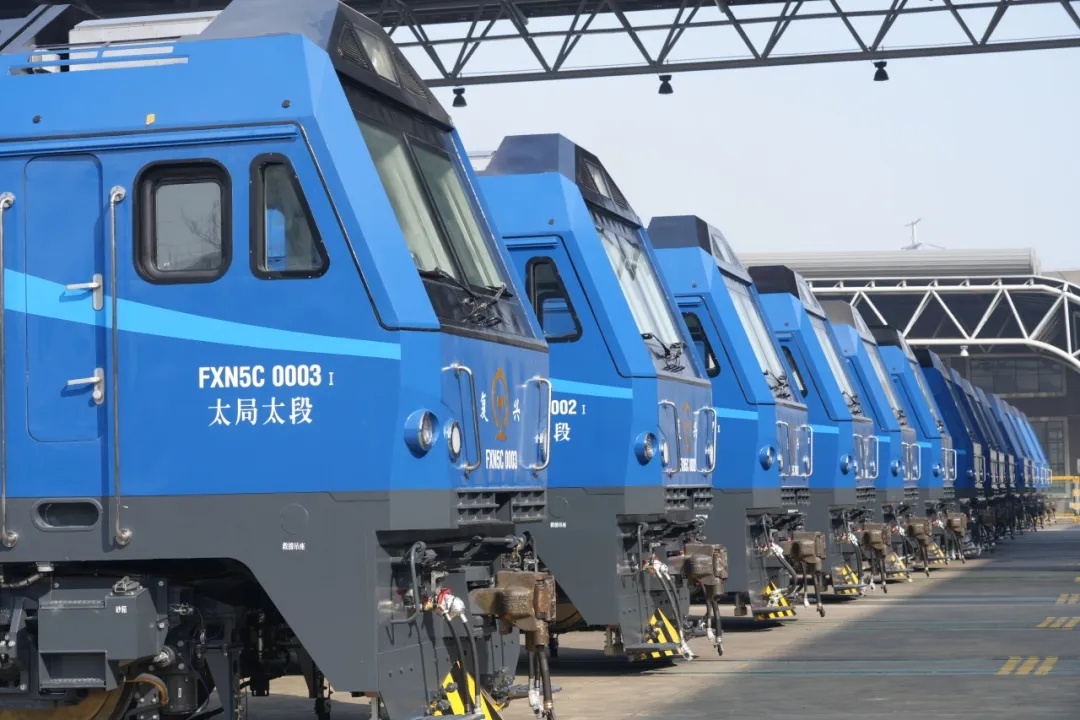
Developed to meet the demand for high-power diesel locomotives on mainline freight corridors, the project supports greener operations by reducing emissions and energy consumption, contributing to the high-quality development of China’s freight diesel locomotive fleet. Organized by China State Railway Group, the project was led by CRRC Qishuyan in collaboration with CRRC Dalian Co., Ltd..
Building on proprietary 4,400-horsepower diesel shunting and passenger locomotive platforms and drawing on mature technologies from AC electric and diesel-electric traction systems, the team developed a next-generation AC transmission freight diesel locomotive characterized by safety, reliability, energy efficiency, environmental performance, intelligent connectivity, and strong economic efficiency. The team also showed focus on green, modular, intelligent, and standardized design, further showcasing the locomotive platforms.
Since entering batch operation, the locomotive has provided strong, low-emission power for expanding mainline freight capacity and higher operating speeds. It has significantly improved freight transport capability and efficiency, supported economic development along rail corridors, and delivered solid economic and social benefits, demonstrating strong potential for wider application and market adoption.
