


On January 14, The CPPCC Daily published a signed article titled “Riding the Momentum of the ‘Fuxing’ Trains to Shape a New Transportation Vision” in its “One Year of Performing Duties” feature series. The article was authored by Sun Yongcai, a member of the National Committee of CPPCC and Party Secretary and Chairman of CRRC Group. Below is an excerpt of the article, translated to English.
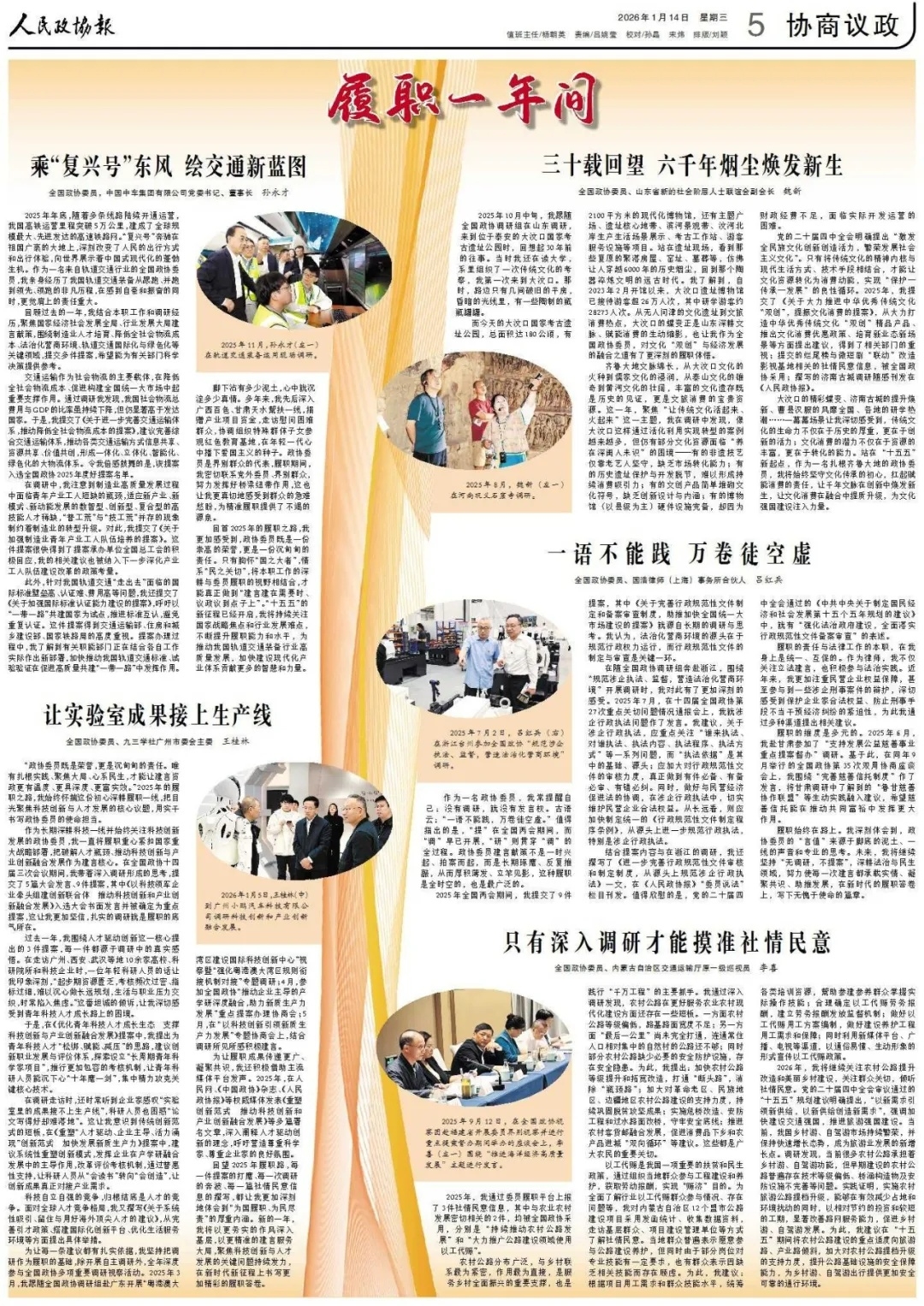
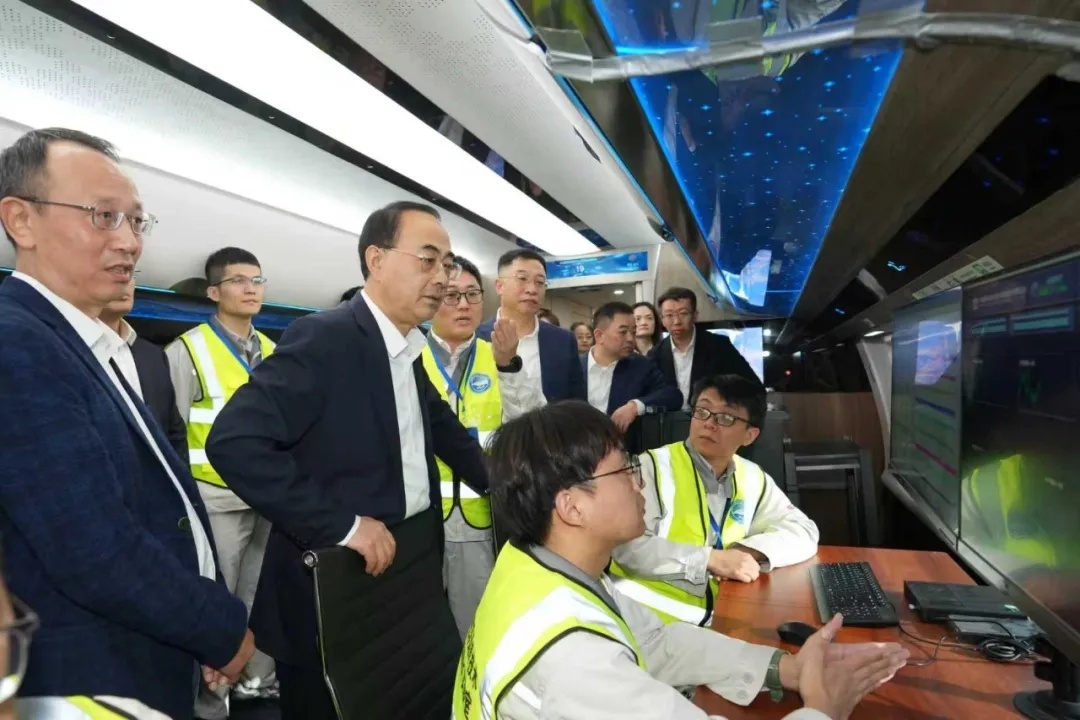
By the end of 2025, as multiple new rail lines entered operation, China’s high-speed rail network exceeded 50,000 kilometers, forming the world’s largest and most advanced system of its kind. Operating across vast regions of the country, the “Fuxing” high-speed trains have significantly improved travel efficiency and passenger experience, while demonstrating the scale and maturity of China’s modern rail infrastructure. Coming from the rail transit sector, I have witnessed firsthand the industry’s transformation from following and keeping pace to achieving leadership, which brings both a sense of pride and a strong awareness of responsibility.
Over the past year, combining my professional role with on-the-ground research, I focused on broader economic and social development priorities as well as key industry challenges. I submitted multiple policy proposals in areas including manufacturing workforce development, reducing economy-wide logistics costs, improving the rule-based business environment, and the international and green development of rail transit, with the aim of supporting more informed and effective decision-making.
As the primary carrier of social logistics, the transportation sector plays a critical role in reducing overall logistics costs and supporting the development of a unified national market. My research shows that while China’s total social logistics costs as a share of GDP have continued to decline, they remain significantly higher than those of many developed economies. In response, I submitted a proposal on further improving the transportation system to reduce logistics costs, recommending stronger integration across transport modes through information sharing, resource coordination, and value creation, and the development of a more integrated, efficient, intelligent, and low-carbon logistics system. This proposal was selected as one of the CPPCC’s Outstanding Proposals of 2025.
During my research, I also observed structural constraints affecting high-quality manufacturing development, particularly the shortage of young industrial workers. There is a growing lack of digitally skilled, innovative, and multi-disciplinary high-skilled talent, with shortages of both general workers and skilled technicians limiting industrial upgrading. To address this, I submitted a proposal on strengthening the training and development of young manufacturing workers. This proposal received a prompt and positive response from the All-China Federation of Trade Unions, with relevant recommendations incorporated into subsequent policy planning for workforce reform.
In addition, in response to challenges faced by China’s rail transit sector in overseas markets - such as high international standards barriers, complex certification processes, and high compliance costs - I submitted a proposal on strengthening international standards and certification capabilities. The proposal called for piloting mutual recognition of standards with partner countries to reduce duplicated certification efforts. It received strong attention from relevant authorities, and during the implementation process I learned that new measures are being introduced to accelerate the application of China’s rail transit standards and testing systems in international cooperation.
Long-term grassroots engagement has also been an important part of my work. Over the years, I have participated in support initiatives in regions such as Baise, Guangxi, and Tianshui, Gansu, including funding industrial projects, visiting disadvantaged communities, and organizing educational visits for young people. These experiences have deepened my understanding of public needs. As a CPPCC member, maintaining close contact with different constituencies and serving as a bridge between stakeholders has provided essential insight to support more targeted and practical policy work.
Looking back on my work in 2025, I have come to appreciate even more clearly that the role of a CPPCC member represents not only an honor, but a significant responsibility. By aligning professional expertise with public service and focusing on real needs and practical solutions, meaningful contributions can be made. As the 15th Five-Year Plan period begins, I will continue to focus on strategic priorities and industry challenges, enhance the quality of my policy work, and contribute practical insight to support the high-quality development of the rail transit equipment industry and the modernization of the industrial system.
