


On August 12, CRRC convened the 2024 Business Management Symposium in Chengdu, focusing on advancing the company’s sustainable development through strengthened governance and innovation. The symposium aimed to reinforce the directives of President Xi Jinping and align with the key messages from the 20th Party Congress Third Plenary Session, with an emphasis on reform, transformation, and high-quality development.
CRRC’s leadership underscored the company’s commitment to aligning with state-owned enterprise (SOE) reform objectives, integrating innovation-driven strategies, and fulfilling both domestic and international ESG (Environmental, Social, Governance) responsibilities.
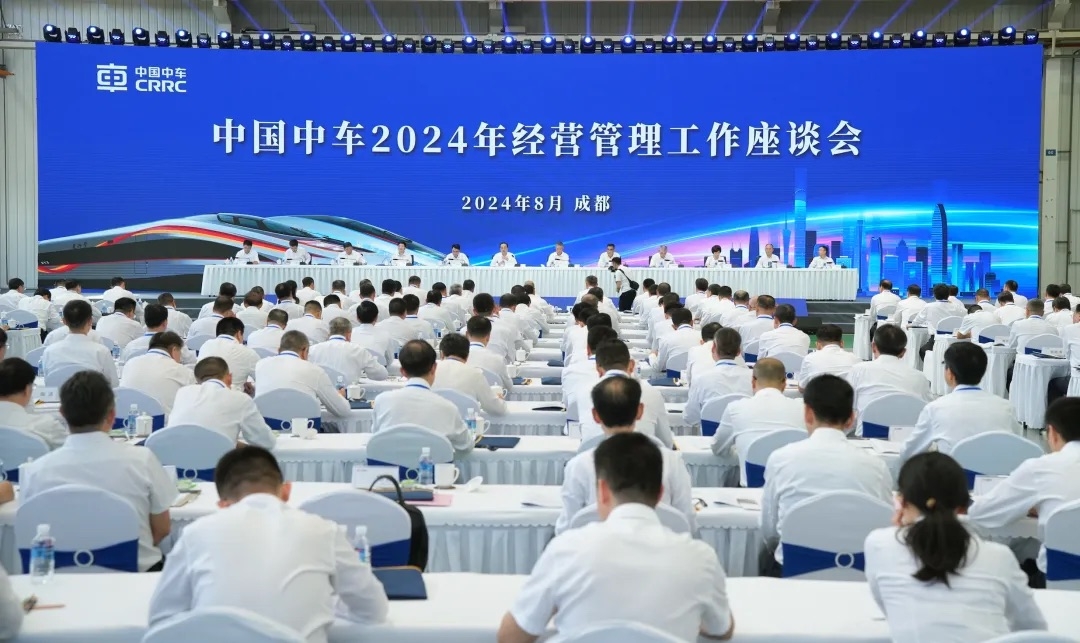
Governance and Reform: Accelerating High-Quality Development
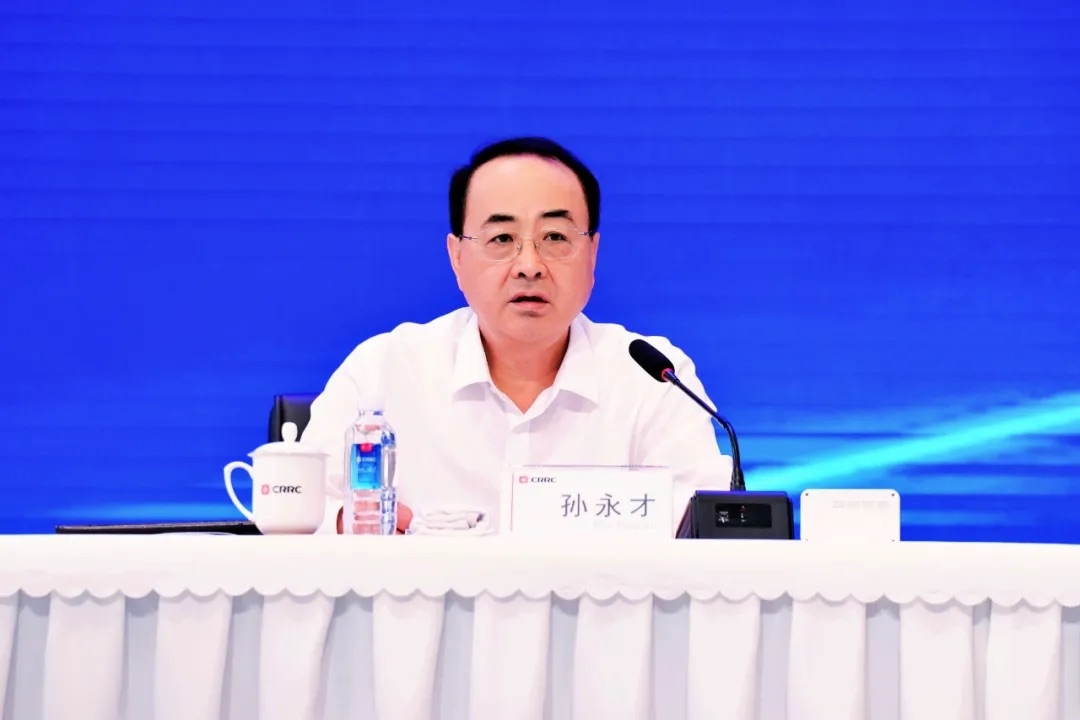
Sun Yongcai, Party Secretary and Chairman of CRRC, delivered a keynote address, emphasizing the company’s successful implementation of President Xi’s reforms, particularly in the context of governance and operational strategies. CRRC’s strong performance in the first half of 2024 was highlighted, with achievements including a “13 consecutive A” rating in the central enterprise leadership performance evaluation and recognition in the “2024 China ESG Listed Pioneer 100” rankings.
This performance reflects CRRC’s robust governance framework, which has been a key driver in maintaining operational excellence and fostering sustainability. The company’s strategic initiatives—such as the development of next-generation technologies like 20MW floating wind turbines and smart heavy-load electric locomotives—align with global sustainability trends, positioning CRRC as a leader in both technological innovation and ESG integration.
Awards and Recognition for Leadership in Innovation and ESG
CRRC’s commitment to sustainable development and innovation was further recognized in several prestigious awards. The company was ranked in the “2024 China ESG Listed Pioneer 100” and the “2023 Top 30 Central Enterprise Brand Building Capability” rankings. Its brand value reached 160.121 billion RMB, solidifying its leadership position in China’s machinery and equipment manufacturing sector. Furthermore, CRRC retained its A-grade evaluation in the 2023 Central Enterprise Reform and Enhancement Action Key Task Assessment, demonstrating ongoing success in reform and governance.
The company’s achievements in innovation were also recognized, with the “Fuxing” high-speed train project winning the National Science and Technology Progress Award. Additionally, CRRC has continued to roll out cutting-edge technologies, including its new energy vehicle series, smart heavy-load electric locomotives, and the 20MW floating wind turbines, which contribute to a stronger foundation for high-quality, sustainable development.
Strategic Planning for Sustainable Growth
Sun also outlined a comprehensive plan to deepen reforms and accelerate CRRC’s journey toward becoming a world-class, sustainable company. This includes reinforcing governance practices, prioritizing ESG factors, and aligning with global standards for transparency, innovation, and corporate responsibility. By focusing on governance as a foundational pillar, CRRC is set to enhance its contribution to China’s economic growth while positioning itself for global leadership in sustainable transport and energy solutions.
Fostering Innovation through Governance and Collaboration
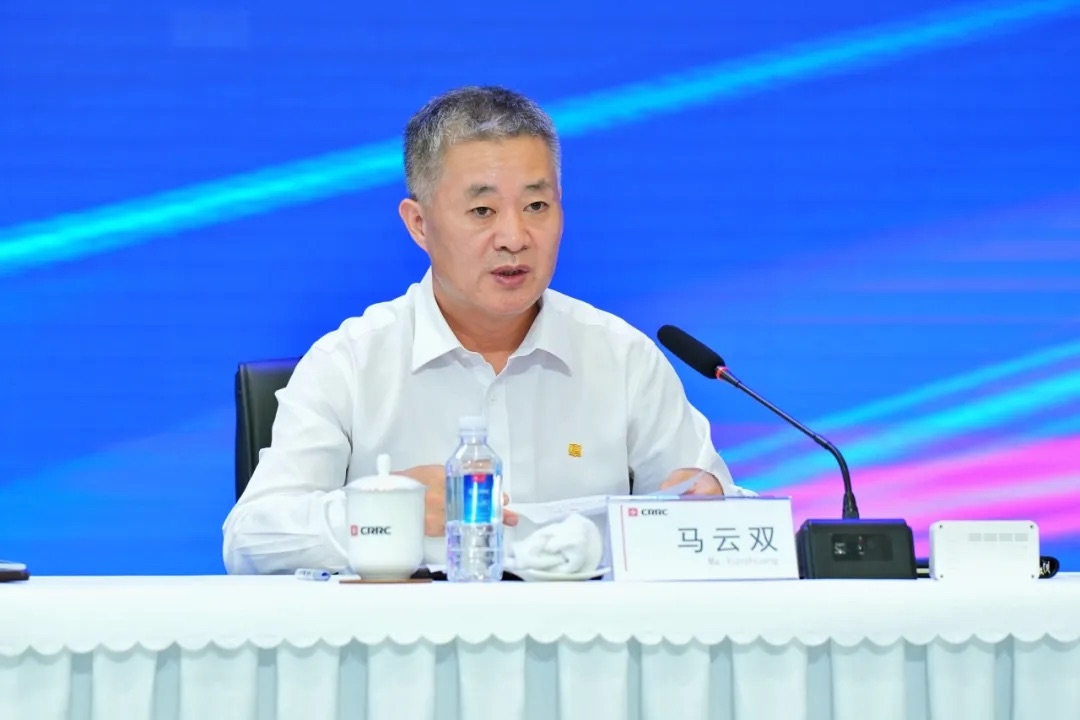
Ma Yunshuang, Deputy Party Secretary and CEO, delivered a management work report titled “Leading Innovation with New Qualities, Promoting Collaborative Innovation, and Steadfastly Advancing CRRC’s High-Quality Development”. The report focused on the Party-building theme of “Leading Innovation” and the “13679” operational strategy, providing a comprehensive plan for the company’s work in the following eight key areas: business performance, market operations, technological innovation, industrial supply chain, deepening reforms, management innovation, risk prevention, and the leadership role of the Party.
During the meeting, senior leaders of CRRC presented on their respective areas of responsibility. Wang An addressed the topic of “Deepening Personnel System Reform to Foster New Productive Forces for High-Quality Development”. Yu Weiping spoke on “Implementing the ‘Three Vehicles’ Initiative to Establish a New Development Pattern for CRRC”. Li Zheng presented on “Using Standardized Contracts as a Gateway to Strengthen Treasury Management”. Feng Jianzhong focused on “Enhancing the Effectiveness of Discipline Inspection and Supervision to Continuously Improve Value Creation”. Lin Cunzeng emphasized “Promoting Collaborative Innovation to Drive New Productive Forces in the Rail Business”. Wang Feng discussed “Improving Strategic Positioning, Shifting Mindsets, and Building Capabilities to Drive High-Quality International Business Development”. Liu Ke’an outlined “Accelerating the Cultivation of New Productive Forces through Digital and Intelligent Transformation”. After the presentations, the leadership team engaged in discussions with the enterprises they are responsible for.
Representatives from seven CRRC subsidiaries, including Zhuzhou Institute, Zhuzhou Locomotive Co., Sifang Co., Changchun Co., Dalian Co., Chongqing Co., and Qihang New Energy Co., also delivered speeches during the meeting.
Strengthening Governance through Stakeholder Engagement
A key highlight of the event was the “Pairing Ceremony”, where CRRC’s leadership team formed partnerships with non-Party representatives to foster innovation and strengthen governance across the organization. This initiative is a clear demonstration of CRRC’s commitment to inclusive governance, ensuring diverse perspectives are integrated into decision-making processes.
Before the formal meeting, attendees visited the Chengdu Company’s exhibition hall, the 2025 smart automated testing platform, and the production site.
The meeting was attended by non-executive director of CRRC Corporation, Jiang Renfeng; independent non-executive directors, Shi Jianzhong and Weng Yiran; CRRC’s Chief Scientist Wang Jun; senior technical leaders at CRRC; the Deputy Secretary of the Discipline Inspection Commission; the Vice Chair of the Labor Union; inspection team leaders; external directors from subsidiary companies; and the heads of various departments and subsidiaries within the organization.
